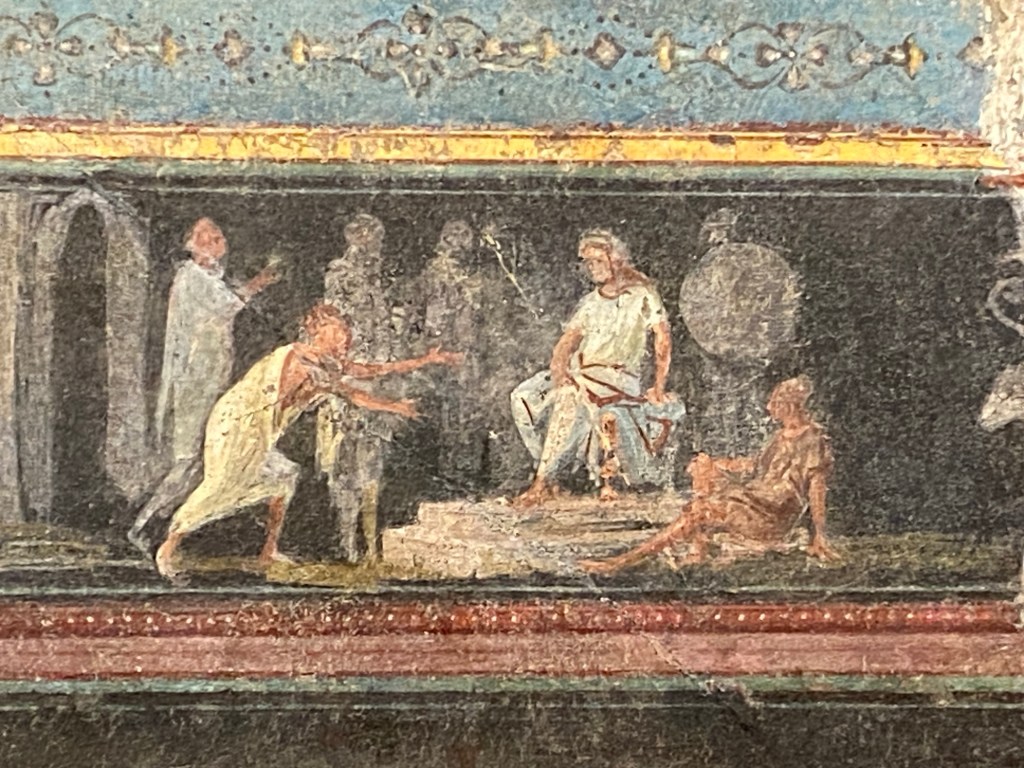
A portion of a Roman fresco depicting people doing something rather ambiguous

from a villa found in the gardens of the Farnesina on a Tiber river enbankment. It is thought to have belong to a friend or relative of the Emperor Augustus, perhaps even Agrippa himself, and dates to the 1st century BC. This room, called Triniculum C, has mainly a "black color (atramentum), made from a mixture of charcoal and glue, was resistant to smoke from the fire and soot from the lamps" per the National Roman Museum - Palazzo Massimo in Rome where this is on
The dining room of the Farnesina house
“ In winter dining rooms, due to their layout, neither large-scale paintings nor the delicate garland-like stucco decorations that decorate the vaults are suitable, as they are blackened both by the smoke from the fire and by the soot continually emitted by the lamps. In such rooms, instead, black-painted and polished panels should be applied above the plinths, with triangular wedges of ochre or cinnabar in between .” (Vitruvius, De Architectura, VII, 4,4)
The banquet hall featured a central table and three couches ( treis klinai in Greek, hence the name " triclinium ") on which diners reclined. The room's southern exposure and dominant color suggest it was used in winter: the architect Vitruvius (1st century BC) recommended a dark floor, capable of absorbing heat, to ensure a comfortable temperature in the cold season. Furthermore, black (atramentum, consisting primarily of ground charcoal with glue) resisted hearth smoke and lamp soot.

From the background emerge delicate landscapes overpainted in light colors, depicting urban landscapes with monuments, arches and doors or rural ones with huts, animals and country sanctuaries.


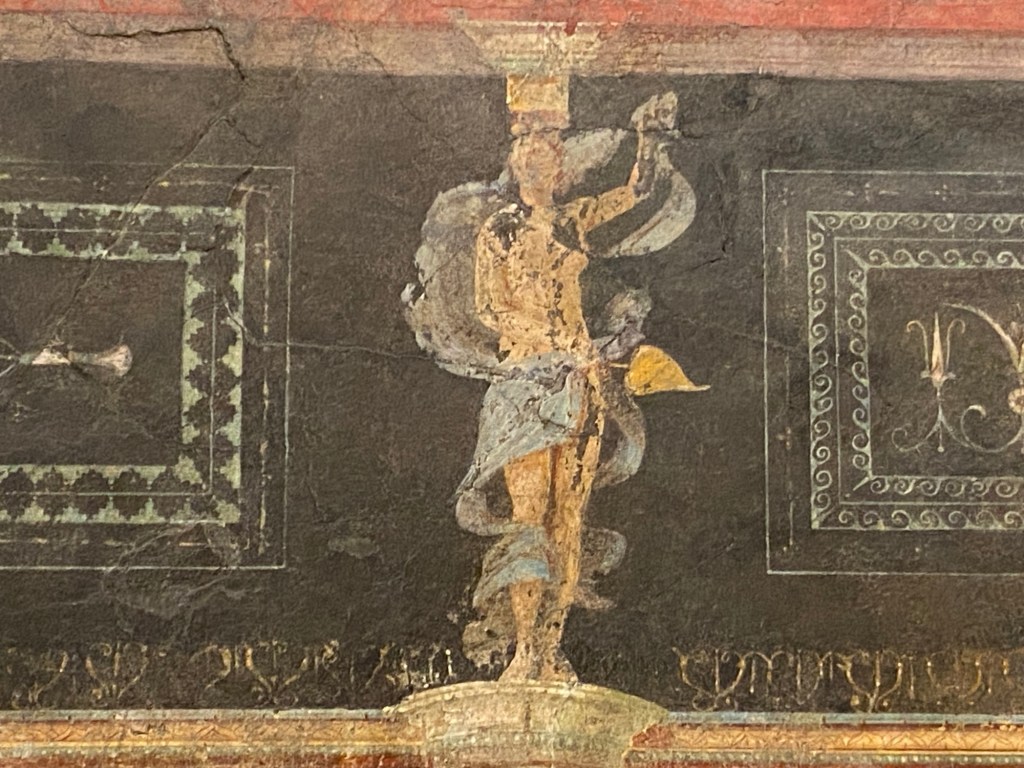
The sumptuous decoration is punctuated by slender columns hung with ivy festoons; the capitals are surmounted by graceful female figures (caryatids).


At eye level runs a figurative frieze with scenes linked by the presence of some recurring characters: popular stories narrated with a lively rhythm that is repeated in the description of the event and the related judgment expressed by a seated figure.
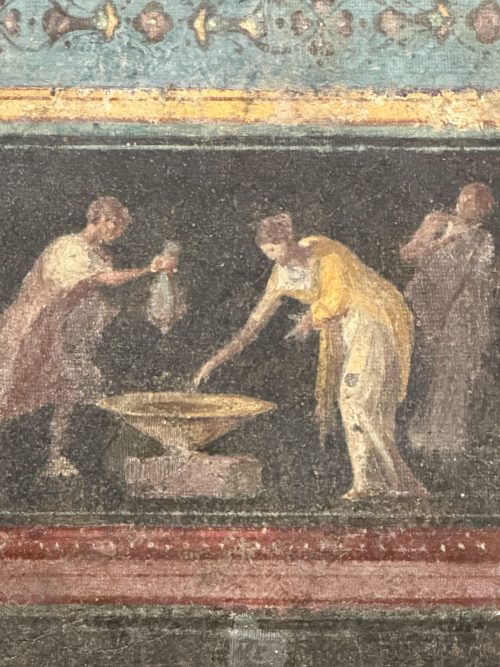
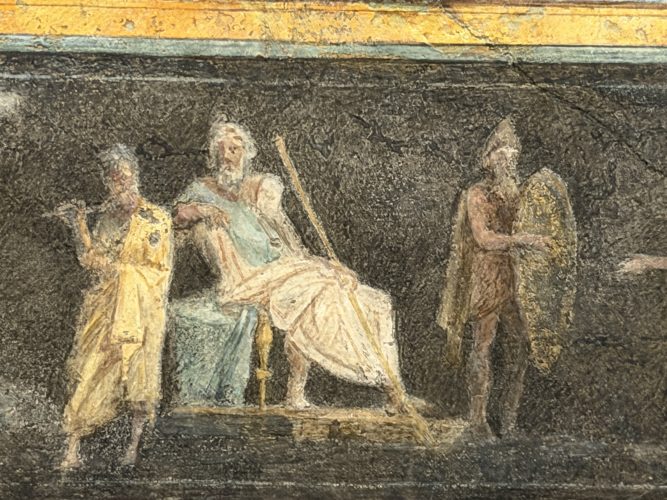
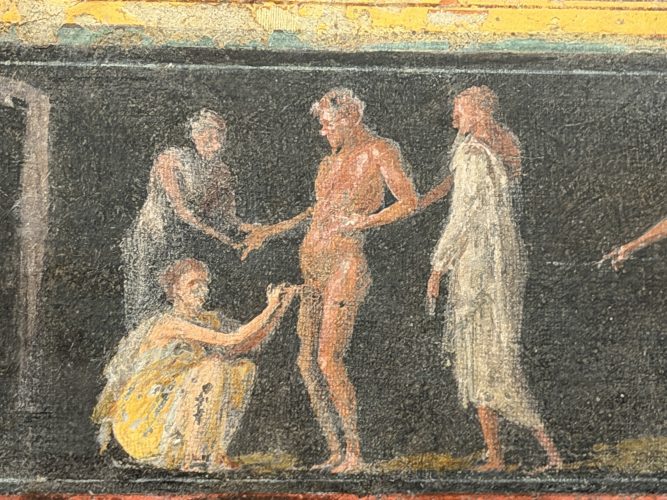
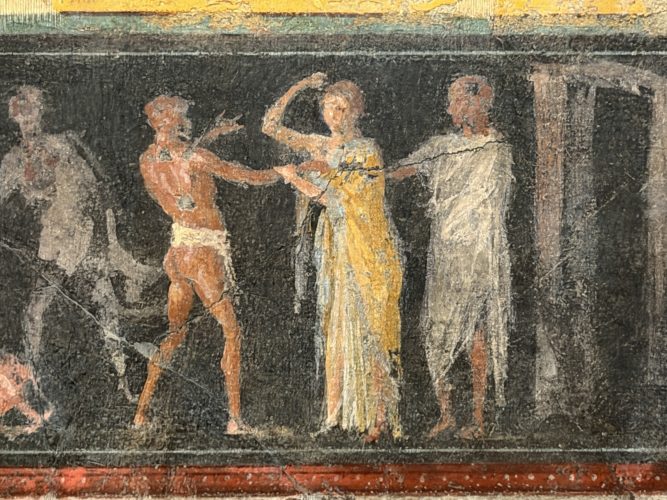
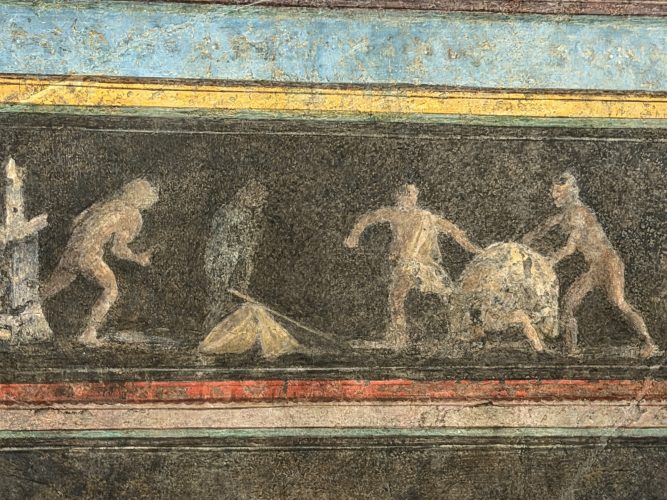
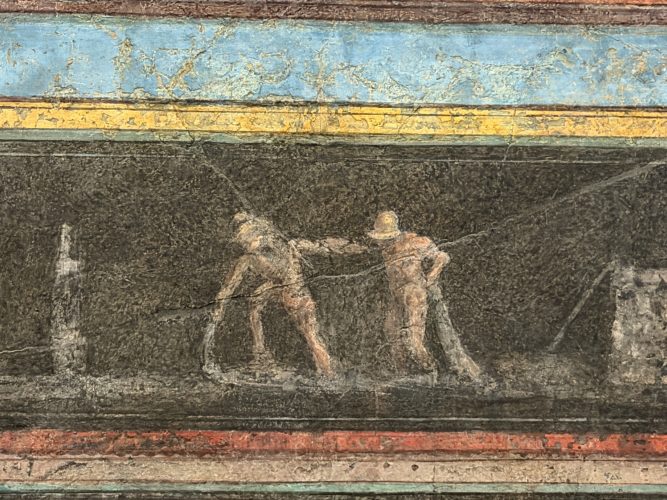
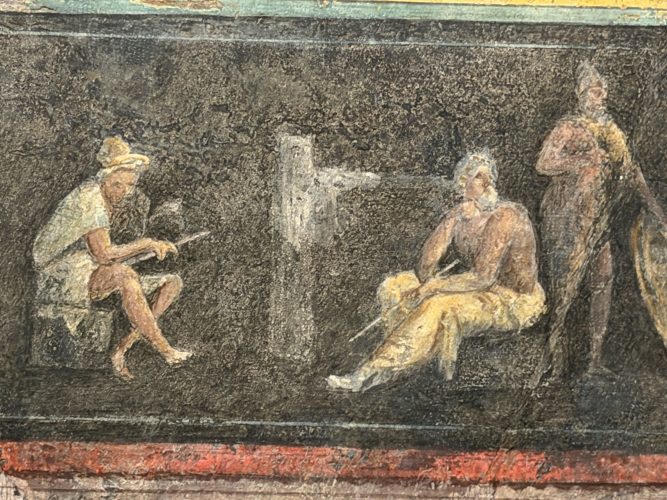
The frieze was read from the bottom of the right wall. On the same wall, near the entrance, an ancient restoration can be seen, which involved the blocking of a passageway. Parts of its polychrome mosaic floor, with meanders and cubes rendered in perspective, can be attributed to this room.
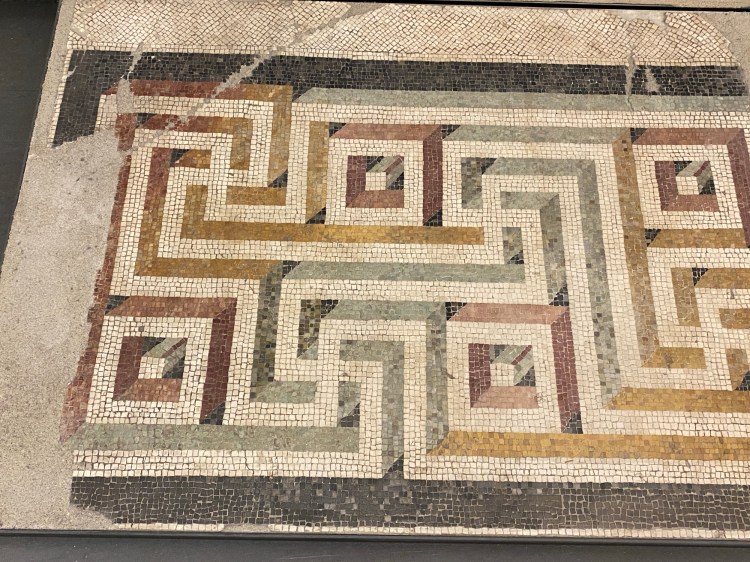
The installation does not reconstruct the original arrangement of the fragments, but rather aims to suggest the effect of the floor mosaic within the room.
